Admittedly, I despaired when I first attempted a crochet loop stitch.
I was trying to come up with methods to make the tail on my upcoming squirrel pattern look ‘fluffy’, and one the techniques I discovered was by using a unique stitch: the loop stitch.
PS: My squirrel crochet pattern is finally released! You can find it here.
Never having heard of the loop stitch before, I decided to give it a go. How hard could it be? Well, I must have spent at least 3 minutes trying to crochet that first loop stitch. Multiply that by 12, and then again by 24 rows… if my math is correct, that means I would have spent close to 14 1/2 hours making my squirrel tail!
Ha ha ha. Torture.
Fortunately, I’ve discovered a few tricks to make crocheting the loop stitch much, much easier. I was able to reduce my 3 minute struggle to a few seconds, and in less than an hour I had a finished tail (phew!)
The Loop Stitch Trick
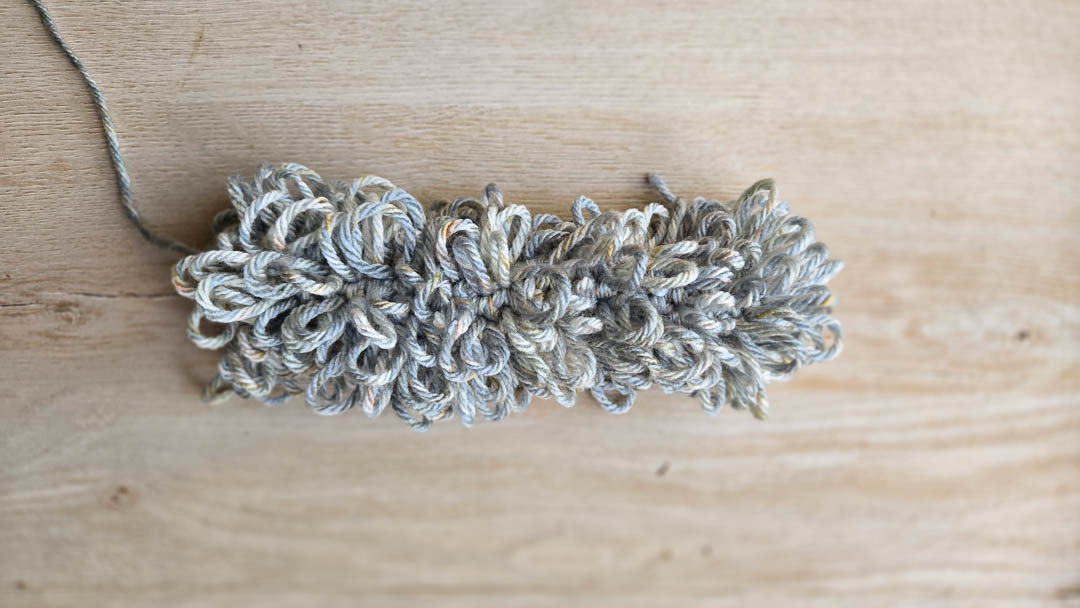
The secret to making loop stitches quickly: hold the yarn further down between your fingers. You’ll see what I mean in a minute. Holding it still in this way prevents the yarn from sliding all over the place, and in turn makes loop stitches much, much easier to crochet.
There is one thing of note about the loop stitch, and that is that the ‘loop’ is formed on the back side (or the “wrong” side) of the piece. While this is definitely not a big deal if you’re making several loop stitches in a cluster (Trust me – you won’t be able to see which side is facing out beneath all those loop stitches!), it might be a dealbreaker if you’re just making one or two loop stitches and you desire your project to be facing the other way around. *Note: there is a way to make loop stitches face the ‘right’ side, but that technique is a bit more tricky – I’ll save it for another post.
The loop stitch is an awesome way to make crochet fur. For an in-depth tutorial on how to use the loop stitch to make fur, check out this post.
Abbreviations
I may use the following abbreviations in this crochet loop stitch tutorial…
St – stitch
Sc – single crochet
Ch – chain
Rnd – rnd
YO – yarn over
Lastly, if the pattern says “sc 2”, it means that you have to crochet 1 sc in each of the next 2 st. This goes for any number and for any st type.
Crochet Loop Stitch Tutorial
You’ll need a round or a row of any size; in my example images, I’m started with a magic circle that has 6 sc inside. I definitely recommend starting with a few simple stitches rather than making loop stitches directly into a ch or a magic circle.
Step 1
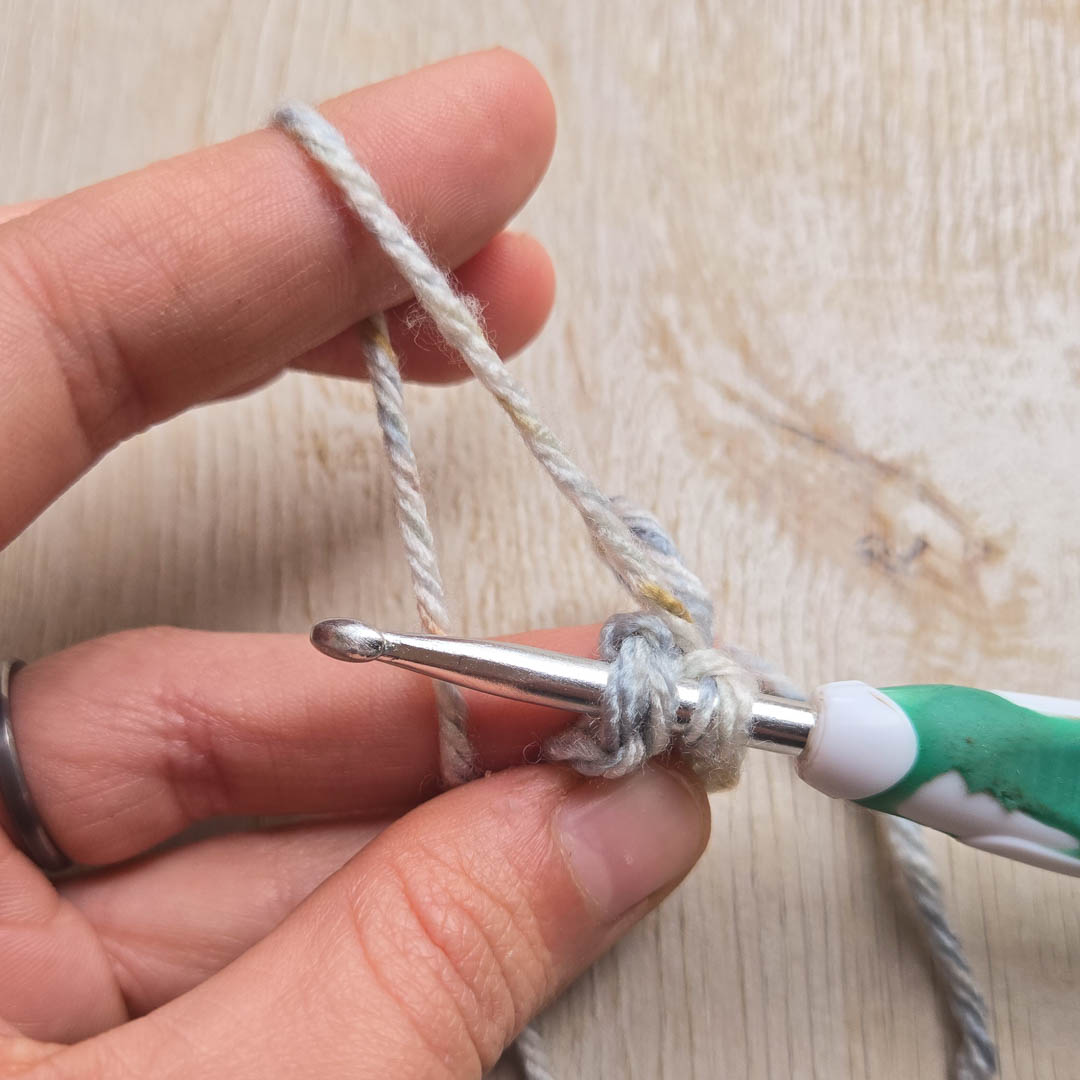
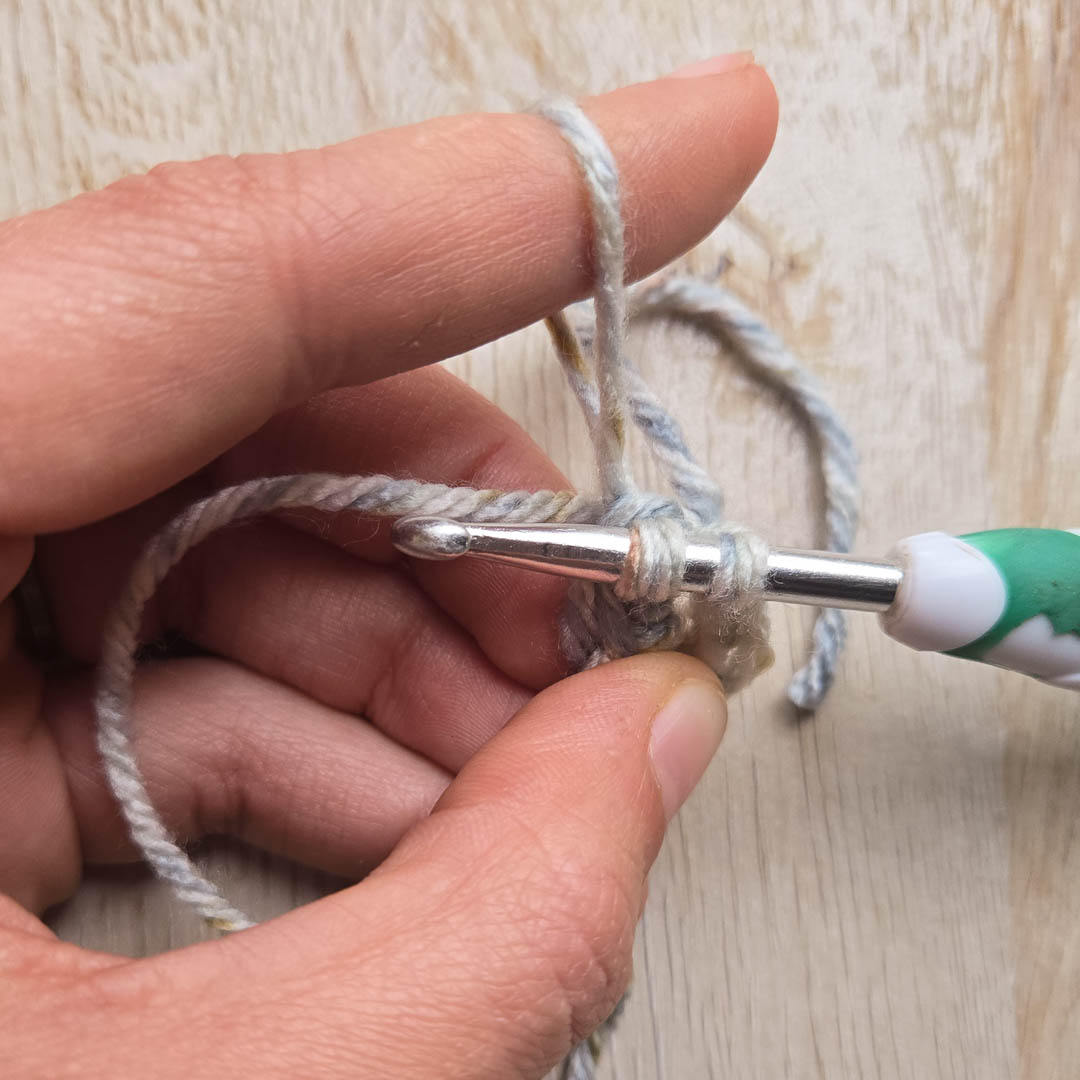
Once you’re ready to make a loop stitch, insert your crochet hook into the next st. Instead of YO, like you would for a standard sc, turn your attention to the working yarn. Drape it around your pointer finger as you would throw a washcloth over a rod (with your finger being the rod and the yarn being the washcloth). Hold your finger with the draped yarn an inch or two away from your work. The distance you hold your finger away will determine the size of the loop; the farther away, the larger the loop.
To keep the draped yarn secure, I pin the working yarn between my other fingers, as shown in the picture/description below.
Image description: my hook is inserted into the next st, and my pointer finger is holding the yarn drape several inches away, as described above. Notice my other fingers: they are holding the working yarn in place in addition to holding my crochet piece. This is not necessary, but it makes the crocheting the loop stitch much easier!
Step 2
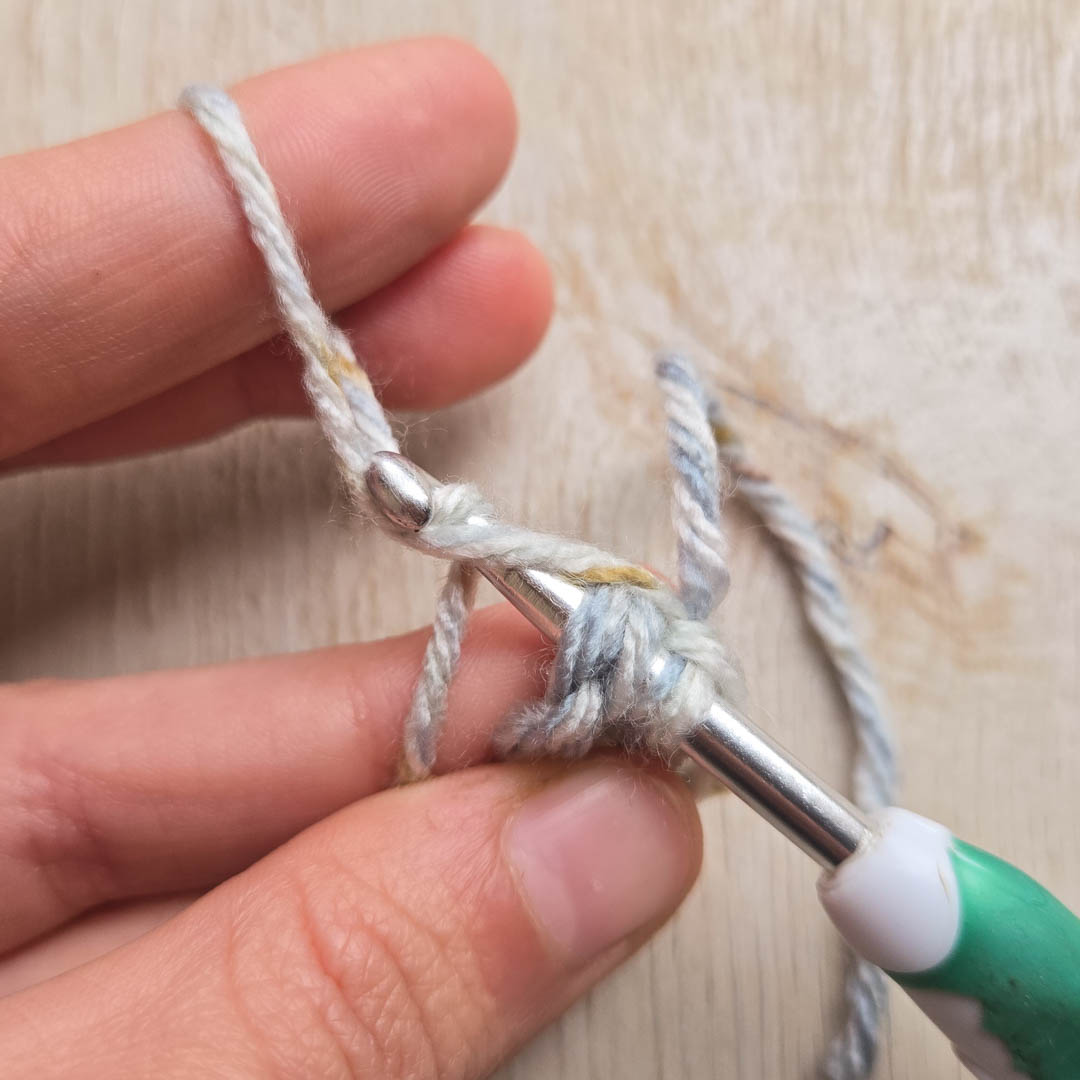
Sweep your crochet hook under both sides of the ‘drape’, grabbing them as if they were one strand of yarn.
Image description: I’ve grabbed both sides of the drape with my hook.
Step 3
Still continuing as if both sides of the drape are a single strand of yarn, draw this doubled-up strand through the st, forming a large loop – but do not pull it tight! It’s going to be the ‘loop’ of your loop stitch.
Image description: I’ve pulled both sides of the drape through the st I inserted my hook through earlier.
Step 4
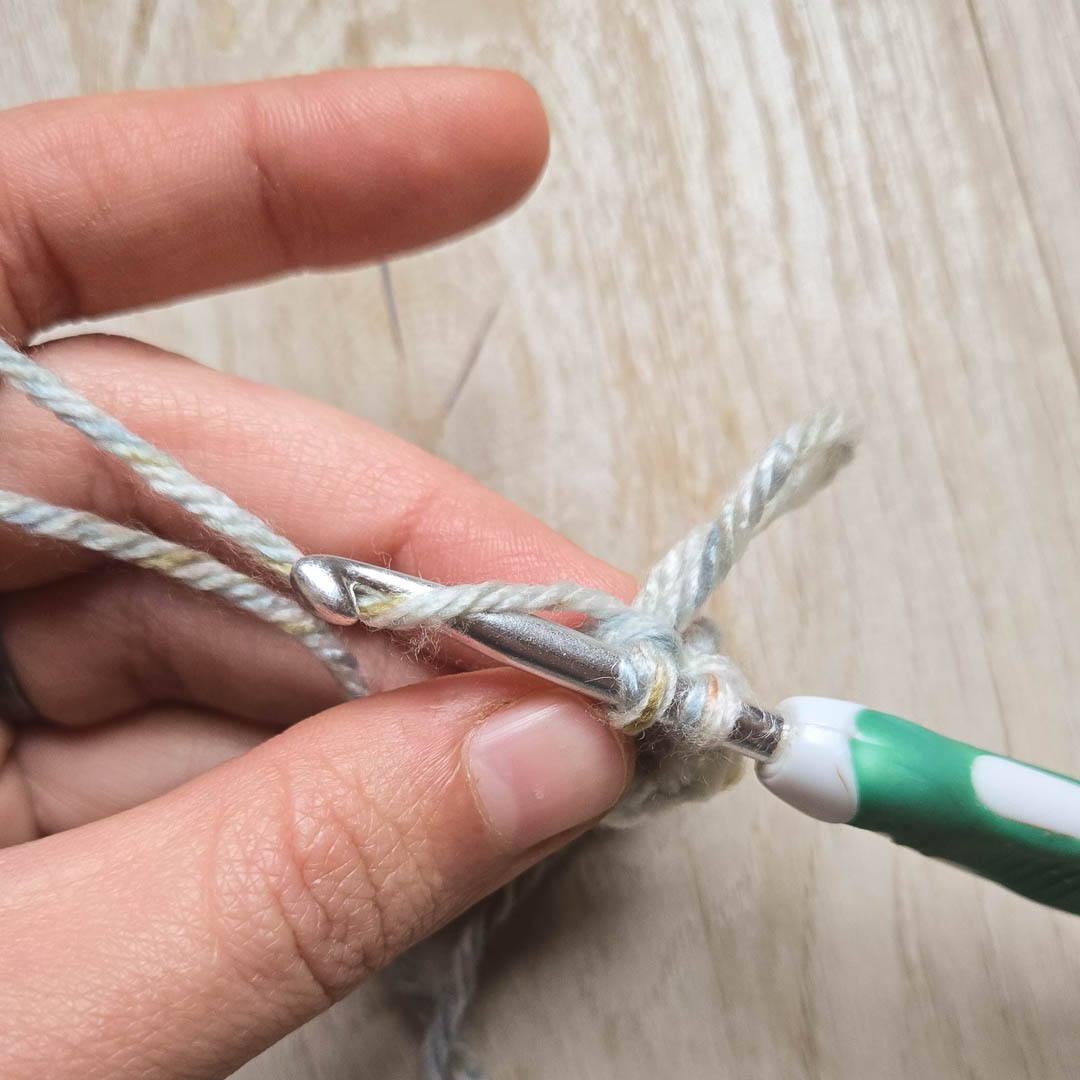
Carefully remove your finger (again, don’t tighten that loop!), and just as carefully, YO. Draw this through the 2 loops on your hook (3 loops if you’re counting both sides of the drape).
Image description: I’ve yarned over, and I’m about to draw it through all the loops further back on my hook to finish the st.
Finished!
Now you can repeat for the next st, if desired.
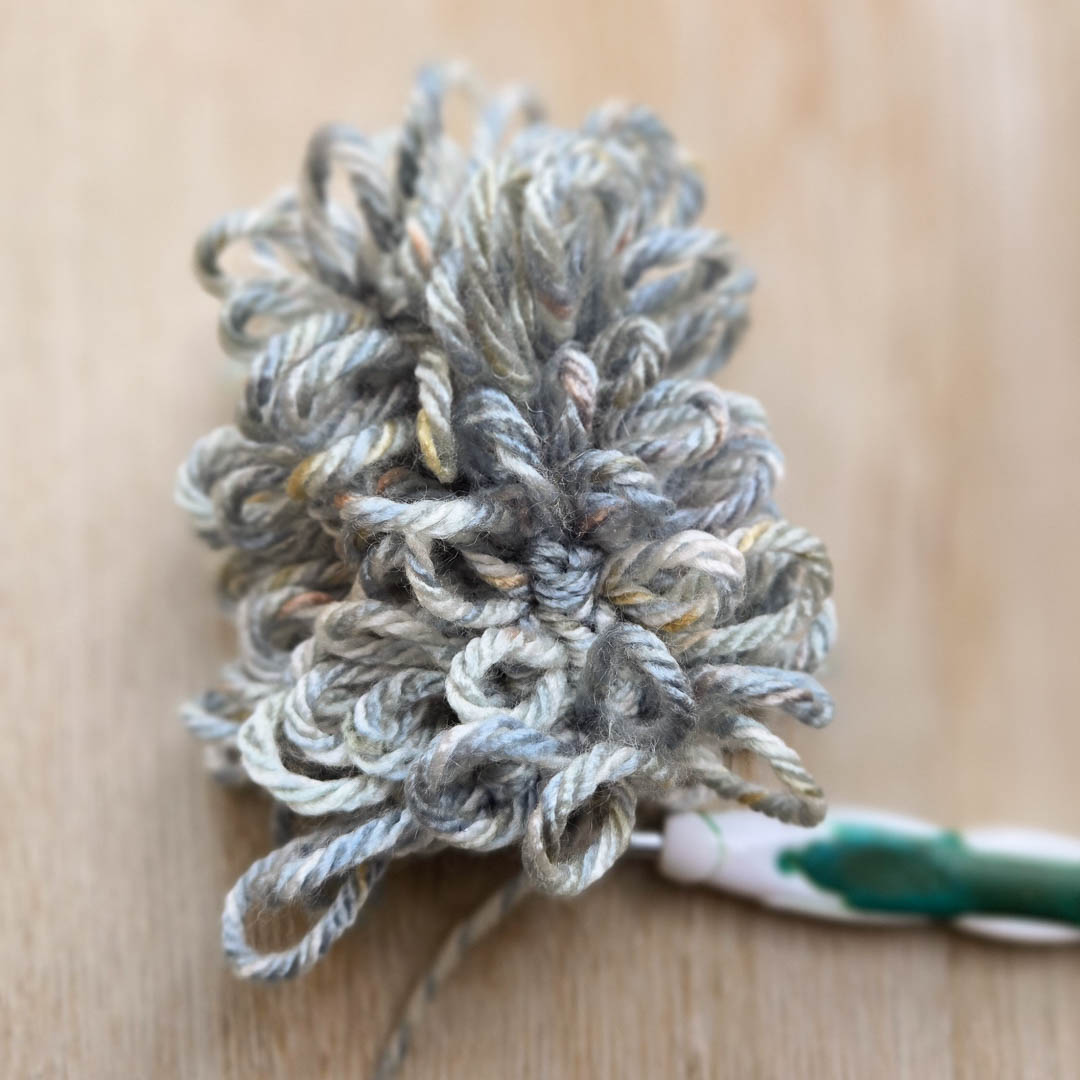
Don’t be distraught if it takes you a few minutes on the first try. Once you’ve followed these 4 steps a few times, you’ll soon find yourself speeding up, and before you know it you’ll be a loop stitch pro!
Conclusion
Save this pattern for later by pinning the image below!